Death

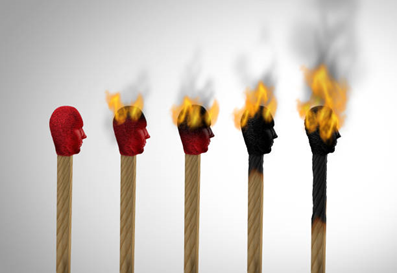
Death, as many people deal with it and believe it to be, is simply the heart stopping, the breathing ending, and then it’s ashes to ashes, dust to dust — gone and erased from this circus we call Earth or the world. But nothing could be further from the truth…
What we call “ending” may merely be the ending of a form — not of what animated that form. Like a wave returning to the sea: not vanished, but no longer recognizable as a separate wave. The disappearance of the body is then not the disappearance of its source.
In that light, death is not a doorway into nothingness, but a falling back into what was never truly left behind. Only the story of “I” — with all its boundaries and certainties — dissolves. What remains is not emptiness as absence, but emptiness as openness. Not the end of consciousness, but the falling away of whatever narrowed consciousness.
And perhaps that is exactly why death, in mystical traditions, does not appear as an enemy, but as a revelation. Not as a rupture, but as recognition.
Sometimes I wonder: what is worse? Being born here? Or dying here?
If we were to look at “being born” with a somewhat mature imagination, there we are in an environment far too cramped — you cannot even stretch yourself properly — surrounded by wetness, intense warmth, hearing everything, feeling everything. You have no idea what is happening outside. You pick up all sorts of traumas, nobody is exempt from that, and then suddenly there is the light at the end of the “tunnel.”Time to get out of here, you think…
And then you are terrified: so much light, so much noise, and a temperature drop from one extreme to the other. The first question that comes to mind: what am I doing here?Well… the rest of your life is spent cleaning up your traumas.
When you die, at least you usually know it’s happening (unless it’s an accident or something). That in itself is already an advantage. Most of the time, you can prepare for it. And then — there is that tunnel again. What do you do?
Dying itself does not hurt, we know that. People think it does when they witness it, but in reality it is not death they are seeing. They are seeing suffering — and the suffering person is not yet dead.
Maybe that is why people are so afraid of death, of silence. Because in true silence, the story begins to crack apart. It is not the body that protests death the most, but the character we have become. That thing filled with names, memories, preferences, resentments, dreams, and unfinished sentences.
The “I” wants eternity, but preferably without change — as if that would somehow be convenient. It wants to continue existing exactly as it knows itself. Only the universe apparently refuses to cooperate with that demand. Bummer.
Nothing remains what it once was. Not the body, not thoughts — even grief constantly changes shape.
And if we are contemplating anyway, perhaps we spend our entire lives practicing death without realizing it. Every farewell scene, every lost love, every version of yourself you leave behind along the way — they are small rehearsals. Small deaths of identities you once believed were permanent.
But wait…
You survive them every single time. Or better yet: something survives them. Something even watches while everything changes and transforms.
That strange “something” has no age. It was already behind your eyes when you were a child, and it is still looking now. Thoughts have changed, your face has changed, your voice has changed, but that silent witnessing presence seems untouched by time.
Maybe that is closer to our real face than everything else.
That is why I sometimes suspect that death is less an ending than an unmasking. As if everything non-essential slowly falls away. First the body, then the role, then the name, then even the story you kept telling yourself about who you were.
And what remains then?
Maybe nothing.
Maybe everything.
Maybe, in the end, those are the same thing.
Consciousness


Comments